
modest
VLADIMIR SCHOOL SCHOOL SCHOOL (part 1)
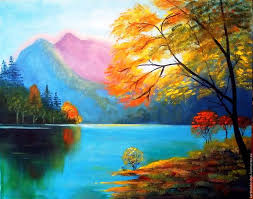
 Vladimir landscape painting is a trend that firmly established itself in art in the 1970s and is now included in the treasury of genuine achievements of the Russian national school. For the first time, artists of this region made themselves known after the First Republican Exhibition “Soviet Russia” held in Moscow in 1960, when three artists – Kim Britov, Vladimir Yukin and Valery Kokurin – showed their works, the result of creative searches and experiments.
In his works, K. Britov frantically studied the techniques of textured writing, looking for a special luminiferous color that conveys the mood. V. Yukin sought to express feelings through the state of nature, V. Kokurin was interested in a light-air environment that changes color and shape of objects. Continue reading